

Ten years on, a business that can thrive without its founder.
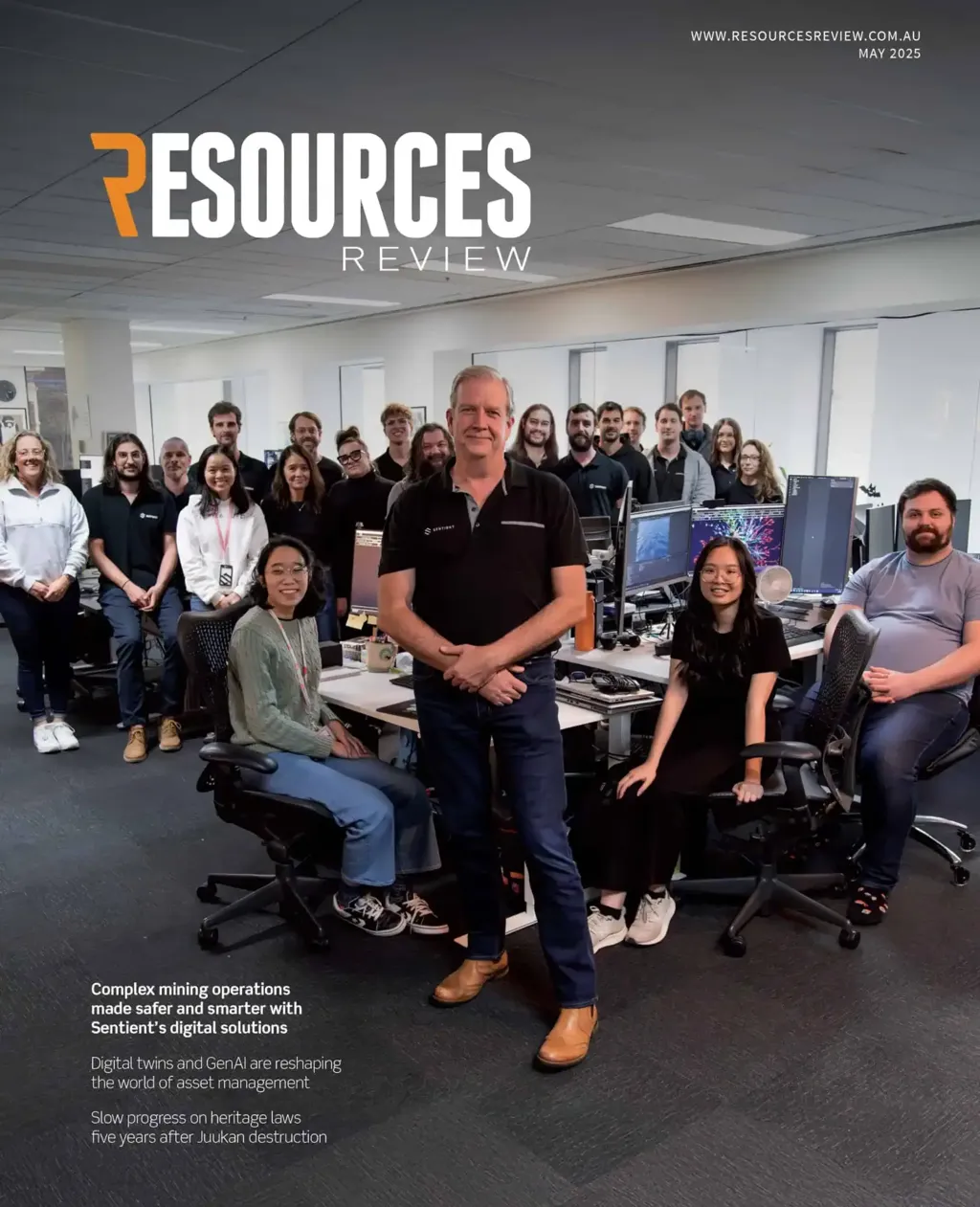


When Doug Bester founded Sentient and first connected with Adapt in 2016, he had a strong instinct about the kind of business he wanted to build; one that could survive and adapt well beyond him, in a sector defined by constant technological change. What he didn't have was a clear sense of how to turn that instinct into a resilient, sustainable organisation design.
A decade later, he is still working with Adapt, and Sentient is not just intact, but flourishing through multiple waves of disruption. That is not a small thing.
Doug knew what he didn't want. His time in more traditional organisations had given him a sharp sense of what poor, rigid leadership looks like. He found it fundamentally disabling, and he wanted to build something different, a people-first culture, a distributed leadership model, and a business that did not depend entirely on him to function day to day.
The harder part was making that instinct real.
"I had quite a strong idea of how I wanted to do it, but I didn't really know how," Doug explains.
It was a real leap of faith. A lot of the organisations I worked for had the hierarchical approach - it was almost the job of management to hide information from people, and I always thought that this was disabling to high performing teams.
Doug Bester, Founder, Sentient Computing
In a world where technologies, markets and client expectations shift every few years, he believed that kind of rigidity was not sustainable.
What he needed wasn't just a framework. He needed confidence that a different, more fluid way of doing things was actually possible. One that could absorb shocks, handle team changes, and keep evolving with the work.
Adapt provided that confidence and then a structure to build on it. Over ten years, the work centred on something deceptively simple, getting Doug out of the day-to-day running of the business so he could focus on the things only he could do, while building a leadership system that could navigate change on its own.
That meant building what Doug calls a "Guardian team," a leadership group capable of carrying the business forward on its own and re-configuring as reality changes. It also meant working through the inevitable cycles of growth, team change and strategic shift that any founder-led business goes through. By Doug's own count, this team has reinvented itself roughly three times over the course of the relationship. That kind of turnover would destabilise a lot of businesses. For Sentient, it became something they leaned into and learned to plan for and design around.
Mandy Chapman, a senior leader spanning marketing, people and culture, and operations, frames the value of the work differently and perhaps more precisely. "It allowed Doug to have the people-first approach without knowing it," she says.
Like all good business entrepreneurs, he worries about turnover, revenue and payroll, Adapt actually provides an area that focuses on people. But the outcome, to get the outcome, is your people.
Mandy Chapman, Senior Leader, Sentient Computing
That distinction matters. The coaching work didn't replace Doug's commercial instincts; it gave those instincts a structure to operate within. Role clarity, professional development conversations, understanding how long you're likely to retain someone and planning accordingly, these are not soft extras. They are the mechanics of a business that can sustain itself over time without needing to freeze around a single org chart.
Today, that flexible leadership model is part of why Sentient can keep delivering complex digital solutions while technologies, clients and markets move around it. The most tangible result, Doug says, is that he was removed from the day-to-day. It sounds straightforward. It isn't.
It enabled me to do other things with my time that there was no way I could have done previously.
Doug Bester
That space is what allows him to focus on longer-term bets, new platforms, new sectors, new partnerships, rather than reacting to every operational issue. That shift, from founder-as-operator to founder-as-strategist, is what Adapt describes as its core purpose, building businesses that are resilient beyond the person who started them. For Sentient, it has taken ten years of consistent work, two coaches, and a team that has turned over and rebuilt multiple times. The fact that the business has navigated all of that while continuing to grow is, in itself, the outcome.
There's also something worth noting about how Doug thinks about the coaching model. He's clear that the real value isn't in the platform. It's in the relationship.
I think we pay three or four times more for the coach than we do for the platform, and I think that's the right model. The platform should be cost-effective. The coaching is where the value is.
Doug Bester
It is a refreshingly honest way to think about what you are actually paying for. And after ten years, it is the kind of conversation that only happens when the foundation, the people, the culture and the leadership structure is fluid enough to respond to what is coming next, and solid enough to keep the business steady while it does.