

A decade of doing the right things. The missing ingredient was a system.
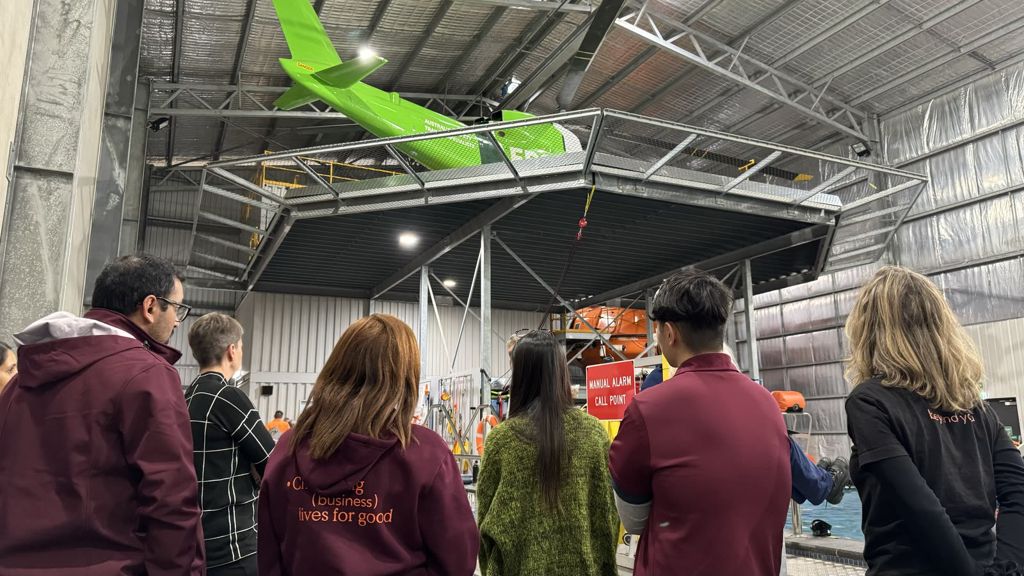
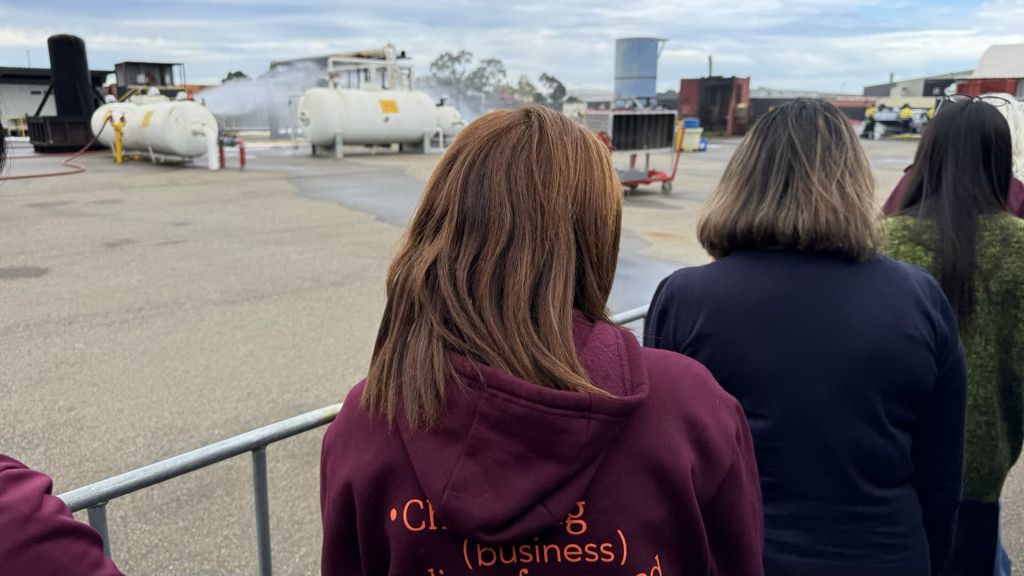
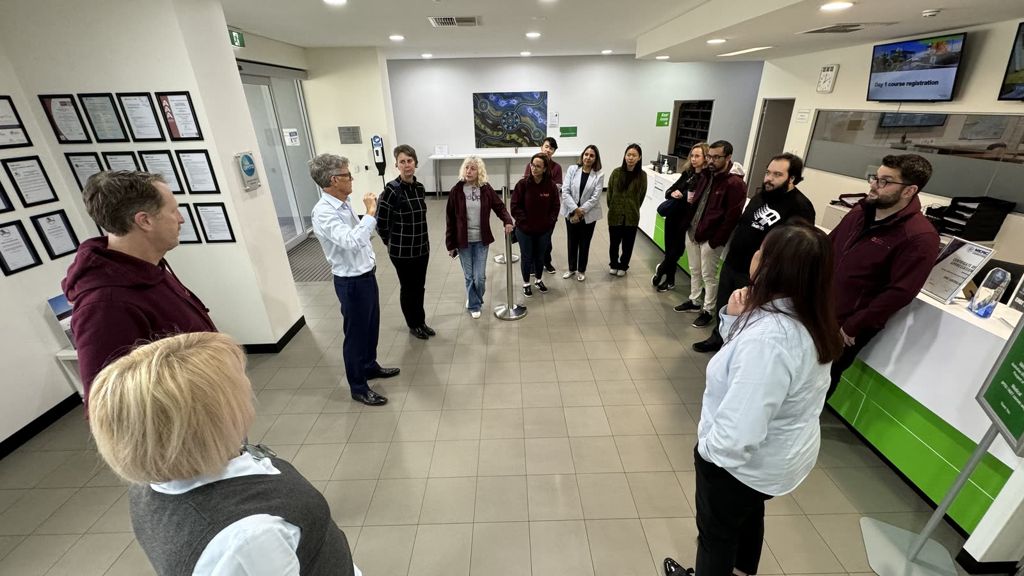
For almost a decade, ERGT did everything right but was caught in a never-ending grind. They had the right frameworks, the right intent, and even a dedicated organisational development specialist on staff. What finally turned the corner wasn't more effort; it was Adapt's combined system of the Lumia platform and Adapt Coaches.
Shane Addis knows what a good business looks like. As Managing Director & Organisational Leader of ERGT, a Registered Training Organisation operating in the resources sector, he and ERGT's leadership team spent years building something that outlasts competitors, generates strong profits, and attracts staff who actually want to be working in their business.
He also knows what it is like to work incredibly hard on an SME and see insufficient return on that effort.
For almost a decade, from 2012 to 2020, ERGT was doing many of the right things. The frameworks were in place: Lencioni's dysfunctions model, Collins's strategic thinking tools. Shane was making a genuine commitment to what he calls 'organisational health'.
ERGT even employed a dedicated organisational development specialist for seven to eight years, a seasoned practitioner with major corporate credentials, including significant roles in large enterprises at the Water Corporation and Ramsey Health. And still it always seemed like ERGT was heading three steps forward, two steps back.
The missing ingredient to success. What was missing, Shane concluded, wasn't intent. It wasn't even expertise. It was a system.
The concept of the total system, that every part needs to work in an integrated way with every other part, was the realisation. We were never going to make progress on all this human system stuff unless we had a platform and a method to follow. We can't just make it up ourselves.
Shane Addis, Managing Director, ERGT
He had first been introduced to Adapt around 2015. ERGT had some internal work to do first, but the seed had been planted.
First, the hard decisions to make way for growth. When COVID arrived in 2020, it forced a reckoning. Shane made the changes he now considers essential prerequisites to everything that followed.
Two members of ERGT's senior leadership team left the business. One had been a large shareholder. The other held both a shareholder and director role. Both were highly qualified and experienced in the corporate world. Both departures were deliberate, and neither was easy. As Shane put it, "I knew there was no way I'd be able to commit to Adapt while I had those people in the business."
Removing a shareholder from your business during a pandemic is not a minor matter. But Shane understood something important: organisational health cannot be bolted onto a dysfunctional leadership structure. It has to start at the top or it doesn't start at all.
"As soon as I could see the Lumia platform was mature, the thinking was clear enough and the Adapt Coach was a big part of the model," Shane says. "We said, 'okay, now let's do this'. If we'd tried to do it a year earlier, either we'd have stuffed it up, or the Lumia platform wouldn't have been quite ready for us."
Strategy, culture, execution, all in one system. ERGT onboarded in 2020 with a meaningful advantage: they were already operating with many of the same underlying frameworks Adapt uses. Collins's strategic thinking tools and Lencioni's team health model were both familiar territories. OKRs were new, but Shane says they came 'relatively easily'.
What was genuinely new was the integration. Not culture as a separate initiative. Not strategy as an annual event. Not execution as a set of meetings. All three, working together as a coherent whole and facilitated by a dedicated Adapt Coach.
ERGT's Adapt Coach is Susie, a co-founder of a consultancy she and her business partner built and ran for many years. For Shane, Susie's lived experience as a business owner is not merely a nice-to-have. It is essential.
Someone who's been involved in a really substantial business, where you've had to pay people's wages out of your personal credit card because there's no cash, it's just a higher level of responsibility. There is no way we could do this ourselves. If Susie said she was retiring tomorrow and Adapt couldn't provide a coach, we would go and find one.
Shane Addis, Managing Director, ERGT
The value of an external coach, Shane argues, goes beyond knowledge of the platform. A good coach has no stake in the internal politics. They can ask questions that no-one inside the business would quite dare to ask. They can hold the mirror steady.
ERGT has now been working with Adapt for five years. When Shane is asked whether the business has made progress, his answer is immediate and unambiguous: "Huge. Yeah, massive."
The business is, by Shane's account, significantly more profitable and markedly more resilient than it was five years ago while operating in a sector he describes as one where 'nobody else survives and makes money'. That kind of performance in that kind of market does not happen by accident.
The culture shift is perhaps the most striking evidence. ERGT once had team members who arrived at 7:30am and left at 4:30pm. They did their jobs competently, went home, and that was considered a good result. Five years into the Adapt journey, people are working on weekends, not because they are instructed to but because they are genuinely invested in the work. "We now have people who would have turned up, done their job, and we'd have been happy," Shane says. "Now they're working their arses off because they're just so into whatever project they're working on. Working on the weekends and loving it."
The improvement has not come from inspiration alone. When Lumia's company benchmarking process initially flagged training and development as ERGT's lowest-scoring organisational health area, the irony was not lost on Shane. For a business whose entire commercial model is built on training, the leadership team treated it as a problem to solve systematically. Over two to three years of deliberate effort, that metric climbed. Progress was measurable, not assumed.
Scaling for what's next. Ask Shane where ERGT is headed now, and the conversation shifts quickly to the next stage phase. The questions are no longer about survival, alignment, or fixing dysfunction. They are about scale and what the business can become when the foundations are this solid. "We're now in territory where there's just so much more we can do here," he says. "It's way more profitable. Way more resilient. You do it and I just don't get why everyone doesn't."
That shift in focus from resolving problems to pursuing possibilities is perhaps the clearest signal that Adapt works. They've helped ERGT do the hard part: build the system, align its leadership, and develop its people. It is now a business that is genuinely positioned to serve other industries whose training needs are not being met.
Shane reflects on the experience with the clarity of someone who has seen both the before and after. The investment in Adapt was a strategic decision. He made a bet on the idea that a healthy organisation, one where culture and strategy and execution are integrated and functioning, is the most durable competitive advantage there is.
Adapt just works. We make good money in a market where nobody else survives.
Shane Addis, Managing Director, ERGT